
In Tashkent, the crossroads of civilisations and the ancient Silk Road, a bold new institution has emerged. The Naqsh School of Crafts is a place where centuries of artistic heritage meet current creativity.
The School will start with a “Pilot Year”, featuring five workshops on Uzbekistan’s living heritage, and will then establish a full Diploma Programme. With our modules and courses, our mission is to nurture the next generation of artists, thinkers, and creative visionaries who will shape the future of art and design.
Through a transformative partnership between the Uzbekistan Art and Culture Development Foundation (ACDF) and The King’s Foundation School of Traditional Arts (KFSTA), we are combining global expertise with local excellence to create a world-class education in traditional and contemporary arts.
The Naqsh School of Crafts is an ambitious initiative ensuring Uzbekistan’s heritage continues to inspire and connect people internationally.
Join us in preserving the past and shaping the future.
“It is with enormous pride that I welcome you to the Naqsh School of Crafts – an institution born out of Uzbekistan’s rich artistic heritage and electrifying vision for the future.
The School of Crafts is a milestone in the Uzbekistan Art and Culture Development Foundation’s mission to preserve, promote, and elevate the country’s cultural heritage globally. Our partnership with The King’s Foundation School of Traditional Arts combines their decades of expertise in traditional arts education with our visionary approach to creativity and cultural exchange.
Together, we are not only safeguarding traditional crafts but reimagining their relevance for a global audience. This collaboration is a powerful testament to the strength of cultural partnerships and Uzbekistan’s role as a rising centre for creativity and dialogue.”
Uzbekistan is a land of astronomers, artisans, and innovators whose legacy continues to inspire. At the Naqsh School of Crafts, we honour this heritage while embracing the future.
Our vision is to create a platform for creativity, collaboration, and cultural exchange, empowering students to connect with the world and contribute to a more inclusive, innovative global arts community.
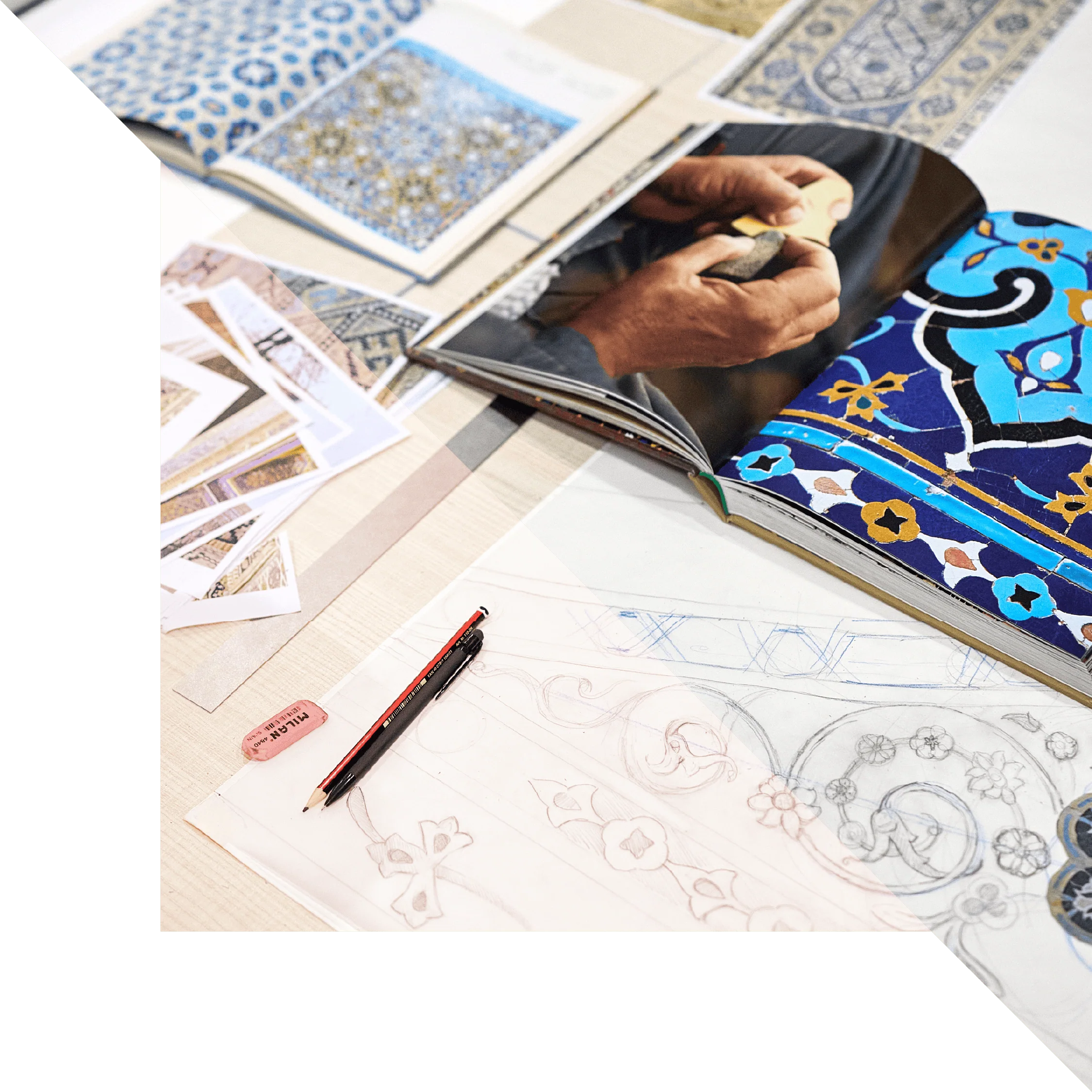
At the Naqsh School of Crafts, we will offer:
Courses in traditional crafts, contemporary design, and interdisciplinary arts.
Opportunities for residencies, exhibitions, and collaborations with leading institutions worldwide.
Outreach programmes to support emerging talent from across Uzbekistan and beyond.
Whether you are a student, a partner, or a visitor, you will find a space designed for growth, discovery, and collaboration.
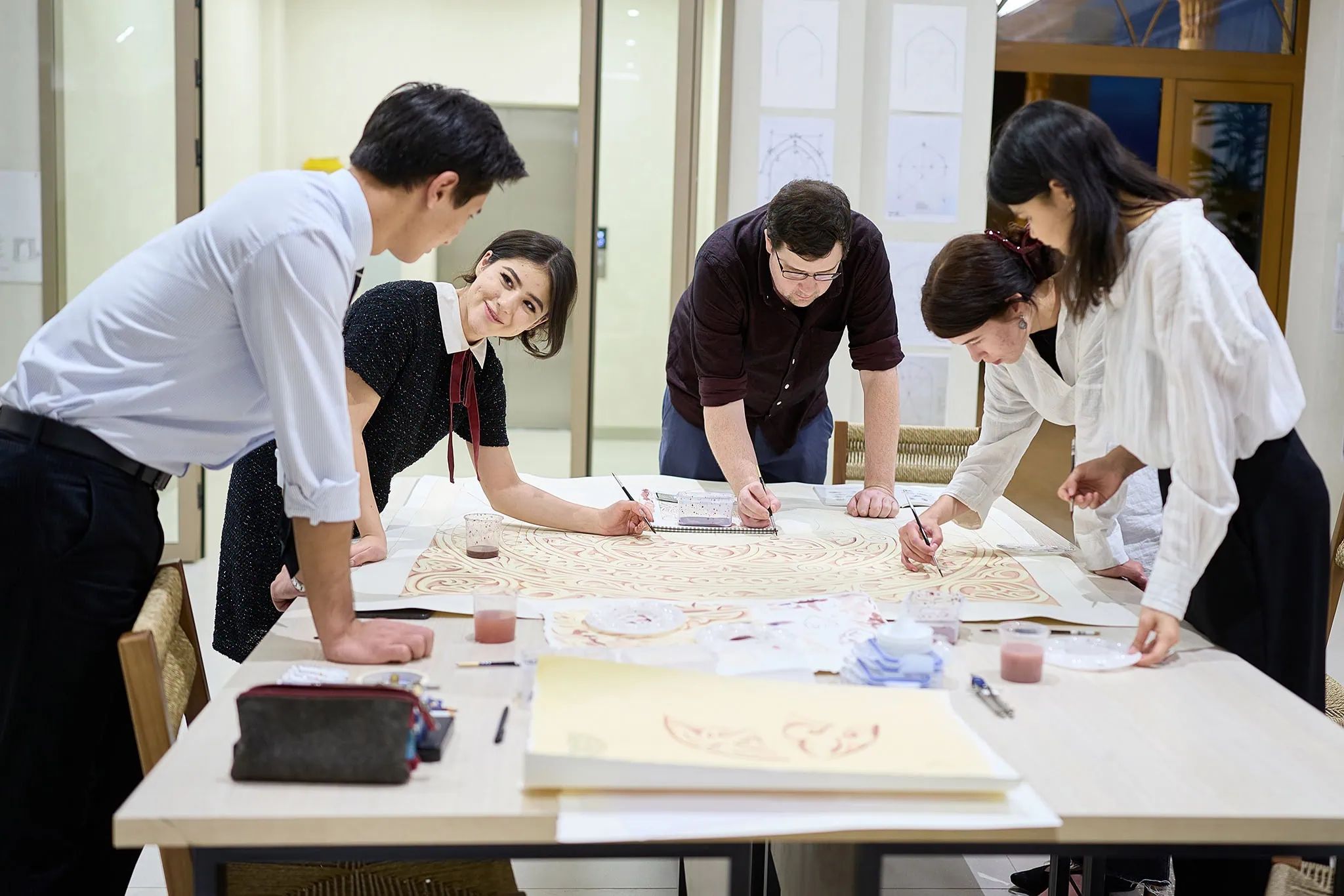
At the Naqsh School of Crafts, we invite you to embark on a transformative educational journey. Our pilot modules are designed to immerse you in the rich traditions of Uzbek craftsmanship, while equipping you with the skills to innovate and create for the future. Each module combines hands-on learning with deep cultural exploration, offering a unique opportunity to engage with the country’s extraordinary heritage.
Duration:
20 – 29 October in Tashkent, followed by 2 weeks in Samarkand during the 43rd UNESCO General Conference
Capacity:
15 participants
What You Will Learn:
Step into the heart of Samarkand and explore the geometry and natural order of the iconic Ulugh Beg Madrasa. This immersive module begins in Tashkent and culminates in Samarkand, where you will study the architectural and cultural significance of this historic monument.
Duration: 3 weeks (Tashkent)
Capacity: 15 participants
What You Will Learn:
Course Fee: $200
Discover the timeless beauty of Uzbekistan’s architectural heritage. This module explores a family of patterns governed by the Golden Ratio and investigates how it has been incorporated into the beautiful monuments of Registan.
Join a team of expert tutors from the King’s Foundation School of Traditional Arts at the Naqsh School of Crafts in Tashkent for an introduction to principles of design. Case studies from Registan and Bibi Khanum will provide participants with a framework to explore the exquisite harmonies created by the masters of the past. Discover universal principles of harmony and proportion that are manifest in the order of nature and echoed in the architectural heritage of Uzbekistan.
Duration: 3 weeks (Tashkent, with a possible optional site visit to Samarkand)
Capacity: 15 participants
What You Will Learn:
Discover the timeless beauty of Uzbekistan’s architectural heritage and its proportions, composition, and ornament.
This workshop investigates how proportional principles govern and unify every aspect of architectural composition, both structure and surface ornamentation. Participants in this workshop will learn how to construct a variety of arch profiles. A case study from Shah-i Zinda will focus this exploration. Participants will discover how different elements of a façade are brought together in a harmonious composition and will develop studies of certain elements of these façades (spandrels, decorative panels) to develop drawing skills in both geometric and biomorphic ornament.
Duration: 3 weeks (Tashkent, with a possible optional site visit to Bukhara)
Capacity: 15 participants
What You Will Learn:
This module explores the interplay between brickwork patterning and kufic script, offering a deeper understanding of their cultural and aesthetic significance. Discover a family of 8-fold patterns and learn how these designs have been interpreted in a variety of architectural contexts and materials, including their importance to squared script compositions.
Participants will explore the design principles underpinning masonry ornament. In addition to working with the module of the brick and its implications for proportioning architectural compositions, students will also learn how the eight-fold family of patterns is constructed with compass and ruler. The course will conclude with an introduction to integrating the square script into geometric compositions focusing on case studies from the monuments of Samarkand and Bukhara.
Duration:
3 weeks (Tashkent, with a possible optional site visits to Khiva)
Capacity:
15 participants
What You Will Learn:
This module investigates the importance of the stylised floral ornament that beautifies Uzbekistan’s monuments. Explore motifs of varying complexity, culminating in case studies from Khiva’s intricately decorated tilework.
Participants will learn about the interrelationship between geometry, proportion, and symmetry, and how these principles govern biomorphic compositions from different periods and regions of Uzbekistan. The importance of framing and border elements to situating these elements in an architectural context will also be explored.
Please note: The workshops require full attendance and dedicated participation throughout each session. We encourage applicants to ensure their complete availability for the duration of their chosen module to maximise the learning experience.
Our partnership with The King’s Foundation School of Traditional Arts will combine KFSTA’s decades of expertise in traditional arts education with local excellence.
The immediate focus of the partnership is the launch of a “Pilot Year”, featuring five hands-on traditional arts workshops that explore Uzbekistan’s living heritage. Led by master practitioners and educators, the first, timed to coincide with the 43rd UNESCO General Conference, will focus on the Ulugh Beg Madrasa in Samarkand.
Each workshop is designed to reflect elements and provide a preview of a planned two-year Diploma Programme, scheduled to begin in 2026.
This collaboration ensures that our students benefit from a holistic education that bridges heritage and current practice, preparing them to lead in the global arts community.
If you would like to receive more information about the Naqsh School of Crafts modules and workshops, please sign up in the section below.